
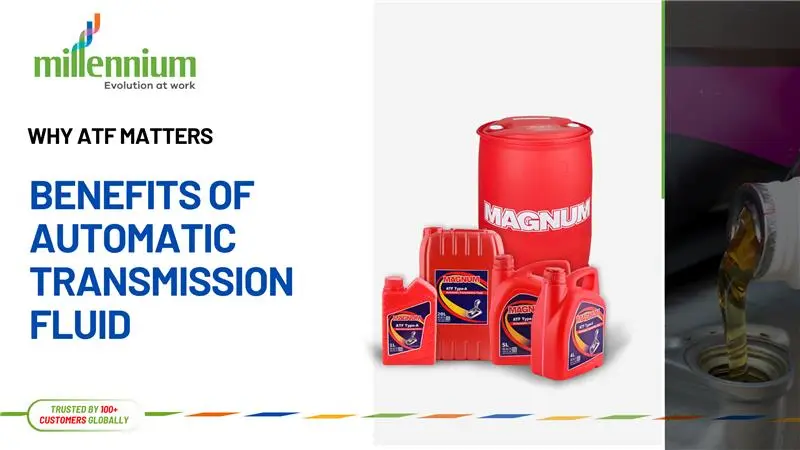
Benefits of Automatic Transmission Fluid: Why ATF Matters
Automatic Transmission Fluid (ATF) plays a far more critical role in your vehicle than many drivers realize. It’s not just a lubricant—it’s a multifunctional fluid that ensures smooth gear shifts, protects internal components, manages heat, and keeps the entire transmission system operating efficiently. Without the right ATF, even the most advanced automatic transmission can suffer from poor performance, overheating, and premature failure. Understanding why ATF matters helps vehicle owners make better maintenance decisions and extend the life of their cars.
What’s So Special About Automatic Transmission Fluid?
Unlike regular engine oil, Automatic Transmission Fluid is engineered to perform several complex tasks at once. First, it acts as a hydraulic fluid, transmitting power within the transmission to enable gear changes. This hydraulic function requires precise viscosity and friction characteristics, which are carefully balanced in ATF formulations.
Second, ATF serves as a lubricant, reducing friction between moving parts such as gears, bearings, and clutch packs. This minimizes wear and tear, ensuring smoother operation and longer component life. Third, ATF works as a coolant, absorbing heat generated by friction and torque conversion, then carrying that heat away to prevent overheating.
Additionally, ATF contains detergents and additives that keep the transmission clean, preventing sludge and varnish buildup. It also protects seals and gaskets, helping to prevent leaks. This combination of functions makes ATF a highly specialized fluid—one that must meet exact specifications to perform reliably.
Different Fluids for Different Jobs
Not all automatic transmissions are the same, and neither are their fluids. Vehicle manufacturers design transmissions with specific materials, tolerances, and performance requirements, which is why different ATF types exist. Using the wrong fluid can lead to harsh shifting, slipping gears, increased wear, or even complete transmission failure.
Some ATFs are designed for older, hydraulically controlled transmissions, while others are formulated for modern electronically controlled systems that require more precise friction control. Certain fluids focus on fuel efficiency, others on heavy-duty performance, and some on extended drain intervals.
This is where standards like Dexron, Mercon, and other manufacturer-specific specifications come into play. Each standard defines viscosity, friction behavior, oxidation resistance, and additive performance. Choosing the correct ATF is not optional—it’s essential. Always follow the vehicle manufacturer’s recommendation or use a high-quality fluid that clearly meets or exceeds the required specification.
Why MAGNUM ATF Dexron III Hits the Sweet Spot
MAGNUM ATF Dexron III stands out as a reliable and versatile automatic transmission fluid designed to meet the demands of a wide range of vehicles and applications. Formulated to meet dexron III ATF specifications, it is well-suited for many passenger cars, light commercial vehicles, and older automatic transmissions that require this standard.
One of its key strengths is excellent friction stability, which ensures smooth and consistent gear shifts over time. This reduces shuddering and harsh engagement, improving overall driving comfort. MAGNUM ATF Dexron III also offers strong thermal and oxidation stability, helping the fluid resist breakdown even under high temperatures and heavy loads.
Its advanced additive package provides superior wear protection, safeguarding gears and clutch components from premature damage. At the same time, its detergent properties help keep the transmission clean by preventing sludge and deposit formation. The result is a fluid that supports longer transmission life, reduced maintenance issues, and dependable performance in everyday driving conditions.
When and Where It Works Best
MAGNUM ATF Dexron III is best suited for vehicles and equipment that specifically call for Dexron III or equivalent specifications. This includes many older-model cars, SUVs, and light trucks, as well as certain power steering systems and hydraulic applications where Dexron III is recommended.
It performs well in urban driving, where frequent stop-and-go conditions generate heat and demand consistent shifting performance. It’s also effective in highway driving, maintaining stable viscosity and lubrication over long distances. For fleet operators and workshops, its versatility makes it a practical choice for servicing multiple vehicle types without compromising quality.
However, it’s important to note that Dexron III may not be suitable for newer transmissions that require more advanced or manufacturer-specific fluids. Always verify compatibility before use to ensure optimal results and avoid potential damage.
Final Thoughts
Automatic Transmission Fluid is a critical component that directly affects your vehicle’s performance, reliability, and longevity. From enabling smooth gear shifts to cooling and protecting vital components, ATF does far more than most drivers realize. Choosing the right fluid—and maintaining it properly—can save you from costly repairs and extend the life of your transmission.
MAGNUM ATF Dexron III offers a balanced combination of performance, protection, and reliability for vehicles that require this specification. By understanding what makes ATF special and selecting the correct fluid for your application, you ensure smoother driving, better efficiency, and long-term peace of mind on the road.









0 Comments